
Supposedly, you would think that Google too much a big enterprise to produce an extended entity that amassed millions of users and subscribers, then snappishly closes its doors. Google has resources, expertise, time, and capital to invest in building innovation into greatness as any other branch of the company.
Then, what could have brought, Orkut.com an innovation and extension of Google to a dead-end?
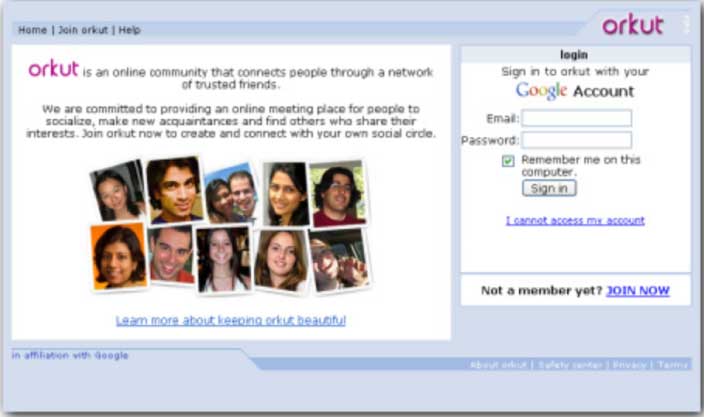
Orkut started in January 2004 and ceased its operation on September 30, 2014. At first, Orkut was the default and most popular social media interface among users Indian and Brazil.
Orkut peaked at 19 million users in India and 34 million in Brazil when it lost its top spot to Facebook, 2014. The company was famous among the population that born during the 80’s and 90’s, and technology workers and users, and students. During that period, to become a member of a social media site meant that you well connected in the realm of technology.
It was easy for users to become a member of Orkut; within one-year Orkut had over 1.5 million communities. It had a clean interface, sophisticated and straightforward, which made most natural for users to navigate.
Users could have rated each other – how friendly, sexy, cool or trustworthy they perceived each other to be. Even more, the company honored and respected the privacy of all its members, as it displayed in the selection tabs. In a short span of time, these features enabled Orkut to spread into millions of friends and communities.

Throughout Orkut existence, 77% of Brazilians’ relied on social media usage for shopping and social networking to research products. The result of Brazilian’s lawmakers banned on outdoor advertisements. Seemingly Orkut arrival satisfied a niche market as a substitute – provider of online ads.
Even so, what caused Orkut to lose stable ground in social media marketing, in the fifth largest online market in the world, Brazil?
In the same year, Orkut was introduced to the market a few weeks later Facebook was launched. Perhaps, Orkut was just a participant listener to the users of their services and not an unobtrusive listener.
An unobtrusive listening requires social media marketers to search for conversations that are happening about their brand and product through social media platforms external to the company’s platform. On the other hand, participant listening requires social media marketers to join groups and study them as an inside member.
Undoubtedly, Google realized the reasons that collapsed their extended social media interface.
Orkut users wanted a better working platform; one that did not limit the number of friends that any user could enlist, an interface with less default blockage, easier ways to upload and share photographs and online videos.
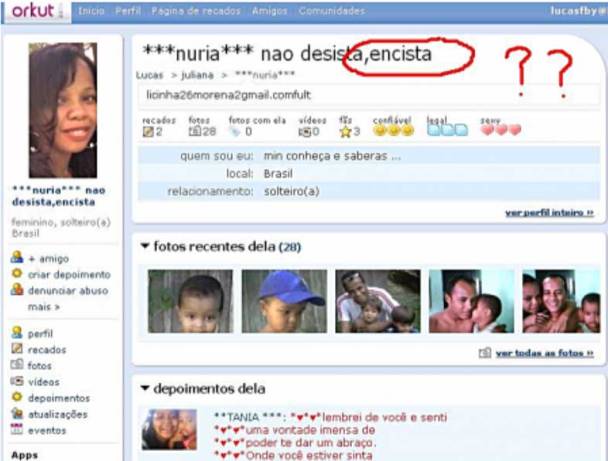
The platform failed in meeting the needs of its audiences. Therefore, they began having fewer consumers and usage of their social media services; in the end, they replaced by another culturally appropriate social media platform – Facebook.
Surely, Orkut could have met their audiences demand, instead of dissolving the business. The exit strategy incorporated by Orkut might have offered them the best ROI, instead of the company building better brand experiences through behavioral branding for its audiences.
Did Orkut incur a lost or they posted a profit?
In September 2011, Orkut had more than 50 million registered users’ data.
Even though, Orkut and Duulin Buks belong to separate industries; Duulin Buks uses social media services, while Orkut was a social media provider. There is a lesson here for Duulin Buks to learn, listening to the message of its social media audiences is essential to aid in strategy development; strategies that encourage the best brand experiences for its audiences.



 duulinbuksjamiekan.blog